Day 8 - Armenia 🇦🇲


Armenia is one of those countries where almost everything I know about it is from its yearly appearance on Eurovision. Although this knowledge is getting rusty as Armenia last qualified for the finals in 2017.

If you’re not so familiar with where Armenia is, it’s in Western Asia nuzzled in between Georgia, Azerbaijan, Iran and Turkey.

In the past year, Armenia has been in the news because of its conflict with Azerbaijan over the region of Nagorno-Karabakh. Both sides have now agreed to a ceasefire, but only after Armenia ceded territory. If you’re interested, Vox has a really good explainer on the war.

Armenia is an ex-Soviet Bloc country. It was annexed by the Red Army along with its neighbours Georgia and Azerbaijan in 1922 joining the Transcaucasian SFSR. During its time in the Soviet Union is when Armenia carved out a niche for itself as the worlds foremost chess-playing nation. 

Although Armenians have been playing chess since the early Middle Ages, Armenian chess really rose to prominence in the 1960s with Tigran Petrosian becoming the world chess champion. Chess has continued to be huge in Armenia to the point that it is now a  compulsory subject in Armenian schools.

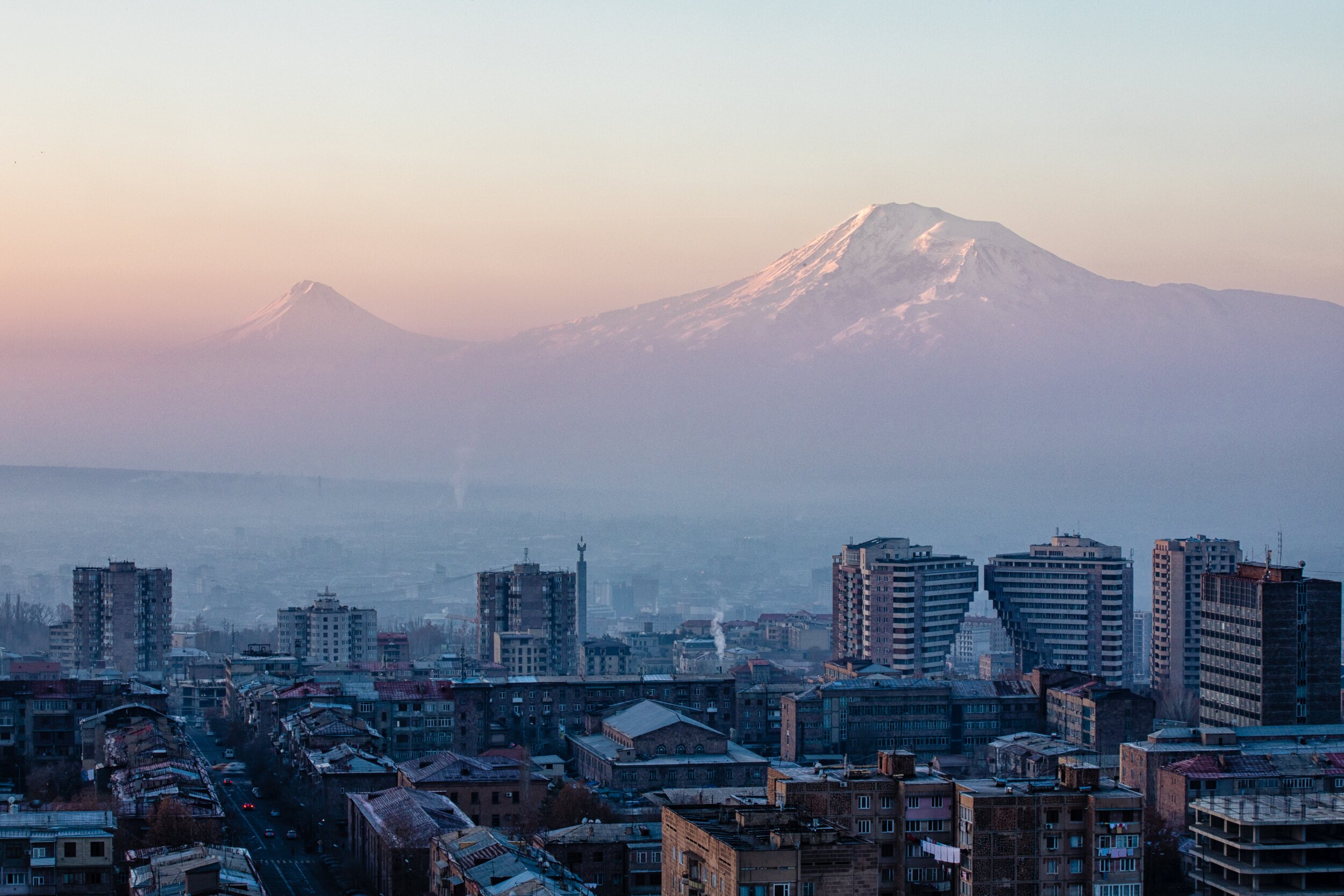
The view across Yerevan (Armenia’s capital) courtesy of Artak Petrosyan

The view across Yerevan (Armenia’s capital) courtesy of Artak Petrosyan

Armenia lays claim to a lot of the oldest things in the world and is among the 6 ancient countries that have survived for thousands of years. Whether that’s the first country to adopt Christianity or build the first cathedral. Armenia is also home to the world’s oldest shoes

Armenian cuisine looks incredible and predictably Armenia lays claim to some historical records.

Armenian lavash is considered one of the oldest bread recipes and has been deemed culturally significant enough to be included in the UNESCO list of “Intangible Cultural Heritage”. Personally, I’m lobbying for British mince pies to be included. Armenia is also considered the original home of the apricot tree. 

I can personally vouch for the deliciousness of Armenia’s national dish manti. Back in the UK, my friend Alex regularly makes manti. Manti are delicious grilled open dumplings with minced lamb served with yoghurt and dried chilli. Manti alone are almost reason enough to visit Armenia.

Making mante with Alex

I'm writing about every country in the world. One a day for 195 days. Learn more
Day 7 - Argentina 🇦🇷


I have a desperate urge to visit Argentina. 

I’ve never been, but I’ve been within spitting distance: at the Chilean border on the Altiplano. I was so tempted to keep driving along the dirt road. Luckily Joe is more sensible than I am. 

I want to visit the southernmost city in the world. I want to dine on tender grilled steak drizzled in fragrant chimichurri and wash it down with a generous glass of Mendoza Malbec. I want to camp and hike in Patagonia and peer down at glistening glaciers from the mountaintops. 

There is however another reason I want to better understand Argentina…

Like most British people, one of the first things which comes to mind when thinking of Argentina is the Falklands conflict. Although the UK fought off the Argentinian invasion, we’ve been left with an enduring antagonism between Britain and Argentinia. 

For me, there’s a weirdly appealing thing about visiting countries which don’t have good relationships with my own - perhaps to explore and understand the roots of the conflict? Maybe it’s a desire to build bridges? Perhaps I’m just a contrarian?

Either way, none of this really matters. Over the years I’ve come to the conclusion that the UK and Argentina actually have more in common than what separates them.

They have both at one point been the most wealthy countries in the world. 

Both countries subsequently adopted and clung to political ideologies that actively made them actively poorer and more isolated. In Argentina’s case Peronism, and in the UK’s, Euroscepticism.

Both make territorial claims to shore up populist support for ineffective governments. The UK obsesses over fishing rights, while Argentina obsesses over the Falklands

Both have been home to the department store Harrods.

Both have Welsh speaking communities.

Argentina, next time I promise I will cross the border.

Those Argentinian mountains are just so close!

Those Argentinian mountains are just so close!

I'm writing about every country in the world. One a day for 195 days. Learn more

Day 6 - Antigua and Barbuda 🇦🇬


Today we head to the Caribbean and the island nation of Antigua and Barbuda. This week has been tough - visiting Angola was especially eye-opening, so today we get to take it easier. Imagine relaxing on a warm sandy beach sipping back some locally distilled rum

Don’t worry about the beach being crowded, the twin islands boast a wealth of 365 beaches. One for each day of the year.

If you fancy doing something more exerting, why not take a scenic hike up Mount Obama. Yes, Mount Obama is named after Barack Obama.

If you’re interested in a whistle-stop historical tour, Antigua was spotted Christopher Columbus in 1493.  Britain colonised in Antigua in 1632 and set up tobacco and sugar plantations worked by a large population of slaves. Antigua and Barbuda’s population had to endure 200 years of slavery before slavery was finally abolished in 1833. Antigua (and let’s not forget Barbuda) finally gained independence from Britain in 1981 and to this day remains a member of the Commonwealth with Queen Elizabeth II as its head of state.

If you’re more of a naturalist, why not take a tour to Barbuda to visit the world’s largest Frigate bird colony. They’re certainly not difficult to spot.

I'm writing about every country in the world. One a day for 195 days. Learn more
Day 5 - Angola 🇦🇴


Today we return to Africa for the second time this week. 

Almost everything I know about Angola is from the tv show Deutschland 86 where East German spies attempt to smuggle weapons to Angola. 

The German Democratic Republic (East Germany) did actually foster a relationship with the Marxist People's Movement for the Liberation of Angola (MPLA) who were engaging in a civil war in Angola. Angola slid into civil war after Portugal (in the classic form of almost every European colonial power) left Angola in 1975 with very few plans and an enormous power vacuum. 

The GDR provided aid, arms (off the books, naturally) and hoped to set up trading relations with the future MPLA government. Think coffee and diamonds for Trabants. The MPLA were also supported by Soviet Union and Cuba who sent over 30,000 troops to help (mostly) win the war.

After winning the civil war, José Eduardo dos Santos, Angola’s new president set about reforming agriculture in Angola with Cubas help growing sugar. Apparently growing Cuban sugar in Angola is not a good idea. Within a few years most of Angolas farmland become infertile and mass starvation spread throughout the country.

After the collapse of the Soviet Union and the discovery of vast oil reserves, Angola’s Marxist government embraced free-market capitalism with a twist. José Eduardo dos Santos decided to make Angola’s oil wealth a family business, putting his daughter Isabel in charge of monetising (and keeping most of) the black gold.

Isabel dos Santos is now Africa’s richest person while Angola is one of the most corrupt and unequal countries on the planet. Oil represents 97% of Angolan exports with almost all of the profits going to the dos Santos family.

Today half of the Angolan population still has no access to clean water, and two-thirds of children suffer from malnutrition. All while the capital Luanda is filled with glistening high rises and $5000/month apartments.

If you’re interested in learning more I really recommend this VisualPolitik video.

I'm writing about every country in the world. One a day for 195 days. Learn more

Day 4 - Andorra 🇦🇩


Today it’s time to expand my knowledge of Andorra beyond the fact it’s a micro-state with a reputation as a budget ski destination for rowdy Brits.

Andorra is far bigger than I thought. It turns out there are many smaller countries. Yes, Andorra is the largest of Europe’s micro states, being larger than Malta, Lichtenstien and over 200 times the size of Monaco.

The official and historic language is Catalan. In fact, Andorra is the only country where Catalan is the official language. Andorra is also the only country in the world to be a parliamentary co-principality

Wait, a what? A co-principality is essentially a country where the position of head of state is shared between two unelected people. In this case, two unelected foreigners: the president of France and the Catholic bishop of Urgell of Catalonia. This makes the president of France, in his capacity as prince of Andorra, an elected monarch, although he is not elected by Andorran people.

So, to summarise Andorra has two unelected heads of state. One of which is elected by another country. That’s Brexiteer-level idiosyncrasy if you ask me.

Andorra’s main hustle is tourism. It reportedly receives over 10 million tourists a year, although this statistic is a little dubious as the only cited source is a deceased Andorran website. None of this really matters though as Andorra is definitely home to Europe’s largest spa, even if it does look like a North Korean take on London’s The Shard

I'm writing about every country in the world. One a day for 195 days. Learn more
Day 3 - Algeria 🇩🇿


Algeria is a country I know embarrassingly little about. (I have a feeling I’m going to be writing this a lot over the coming months!)

The first thing which surprised me about Algeria is its size. It’s the largest African country and the 10th largest country in the world by landmass - making it larger than Mexico and Saudi Arabia. It also benefits from the highest Human Development Index of all non-island African countries. A large part of this is supported by Algeria’s oil industry which makes up a staggering 96% of Algeria’s exports.

Although I knew that Algeria was previously a French colony, I had no idea how integrated it was with France.  Between 1825 and 1847, 50,000 French people emigrated to Algeria. These people are known as Pied-Noir. Notable Pied-Noirs include Yves Saint Laurent and author and philosopher Albert Camus.

Independence from France only came in 1962 after a bloody war where hundreds of thousands of Algerians were killed. Since Algeria’s independence, the number of Pied-Noir living in Algeria has dwindled as the vast majority moved to France, where they earned a reputation for their ardent right-wing views.

More recently, Algeria partook in the Arab Spring in 2010, but unlike many of its neighbours, promised reforms averted a bloody revolution, even if many of these reforms never materialised

Anyway, this is more than I planned to write - it’s time to partake in Algerian culture and put my feet up with a cup of mint tea.

I'm writing about every country in the world. One a day for 195 days. Learn more

Day 2 - Albania 🇦🇱

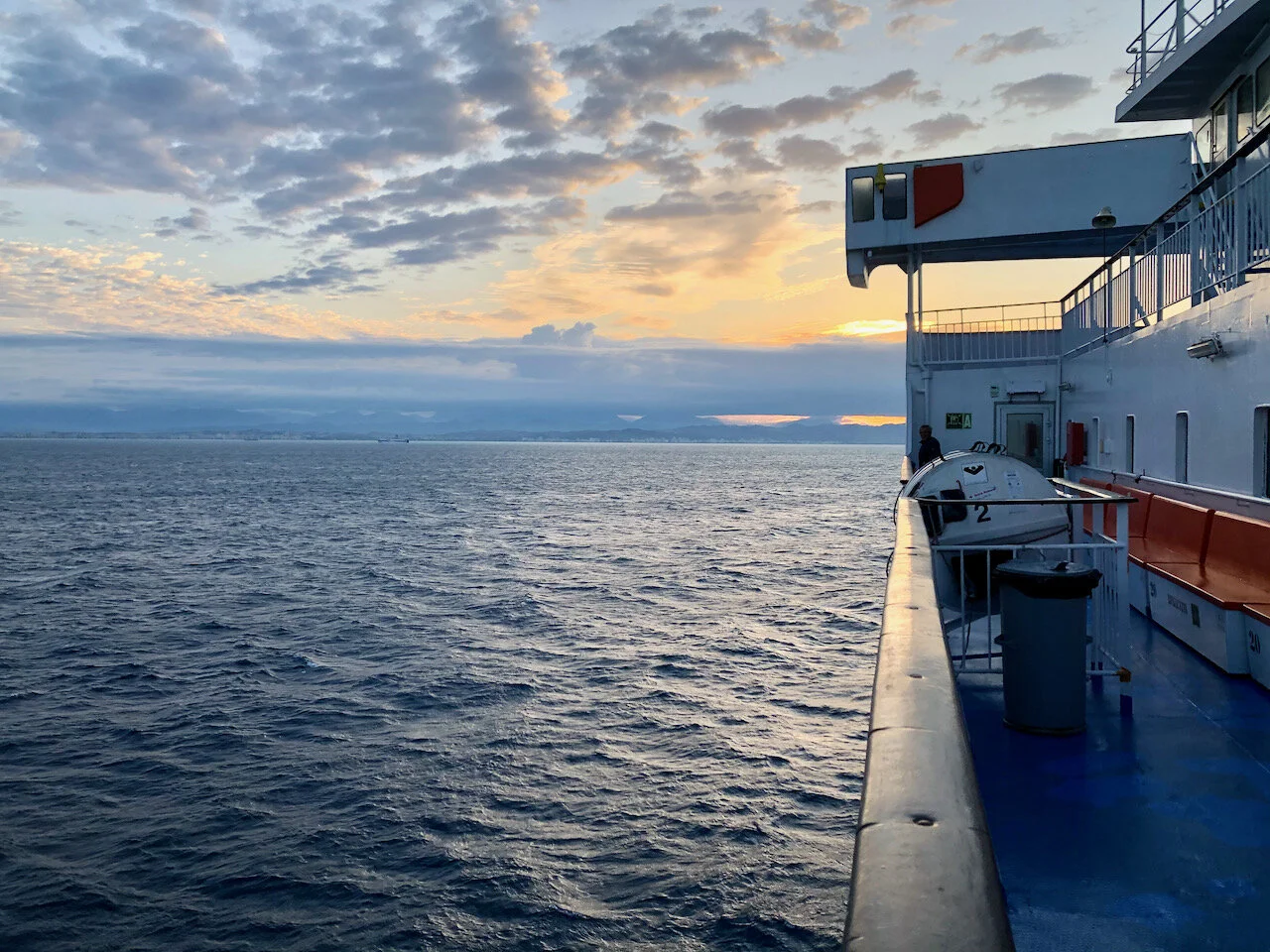
Albania is a country I’ve been lucky enough to visit. Joe and I visited in Summer 2019 as part of a two-week journey through Malta and Southern Italy. We arrived on the overnight ferry from Bari to the port of Durrës. That ferry journey is enough on its own for a blog post.

durres ferry

Of all the European countries I’ve visited, Albania feels like it’s changing more rapidly than any other. Our first experience in the capital Tirana was finding a taxi at a huge roundabout which also functioned as a power tool rental market. Everywhere you looked there were pneumatic drills and angle grinders alongside their owners eager to rent them out.

If you visit Tirana I recommend: 


The Pyramid of Tirana wasn’t the only dubious pyramid in Communist Albania. It turns out that Albania has a long history of pyramid schemes. In 1977 there were widespread riots following the collapse of a pyramid scheme that two-thirds of the population had invested in.  Sadly this wasn’t a one-off. In 1997 the collapse of further pyramid schemes in part led to the Albanian Civil War. Luckily since the end of the Civil War, Albania has been on a brighter path. If you visit, look out for all of the colourful buildings which I vividly remember seeing in Michael Palin’s New Europe.

We may have only spent a few days in Albania, but it’s one place I really want to return to. 

I'm writing about every country in the world. One a day for 195 days. Learn more

Day 1 - Afghanistan 🇦🇫

Afghanistan. What a place to start a round-the-world adventure.

Almost everything I knew about Afghanistan up to this day was from news reports from post 9/11 US invasion and subsequent war. Although this is a sad reflection of what the country has been through, I didn’t appreciate Afghanistan’s diversity and beauty. It’s roughly the size of Texas, yet is home to mammals such as snow leopards, Siberian tigers and brown bears throughout twelve climatic zones.  Afghanistan has been mostly a tourist free zone since its slide into chaos in 1979, but it used to be popular with travellers. It turns out Afghanistan was quite the hippy hang-out destination in the 1960s and 70s

One thing I found particularly eye-opening about Afghanistan is that in 2000 only 5% of children attended primary school. Since then this has risen to a (still rather depressing) 57% in 2018.

A final fact to leave you with. Afghanistan has changed its flag a total of 25 times. 18 of these changes were in the 20th Century alone.

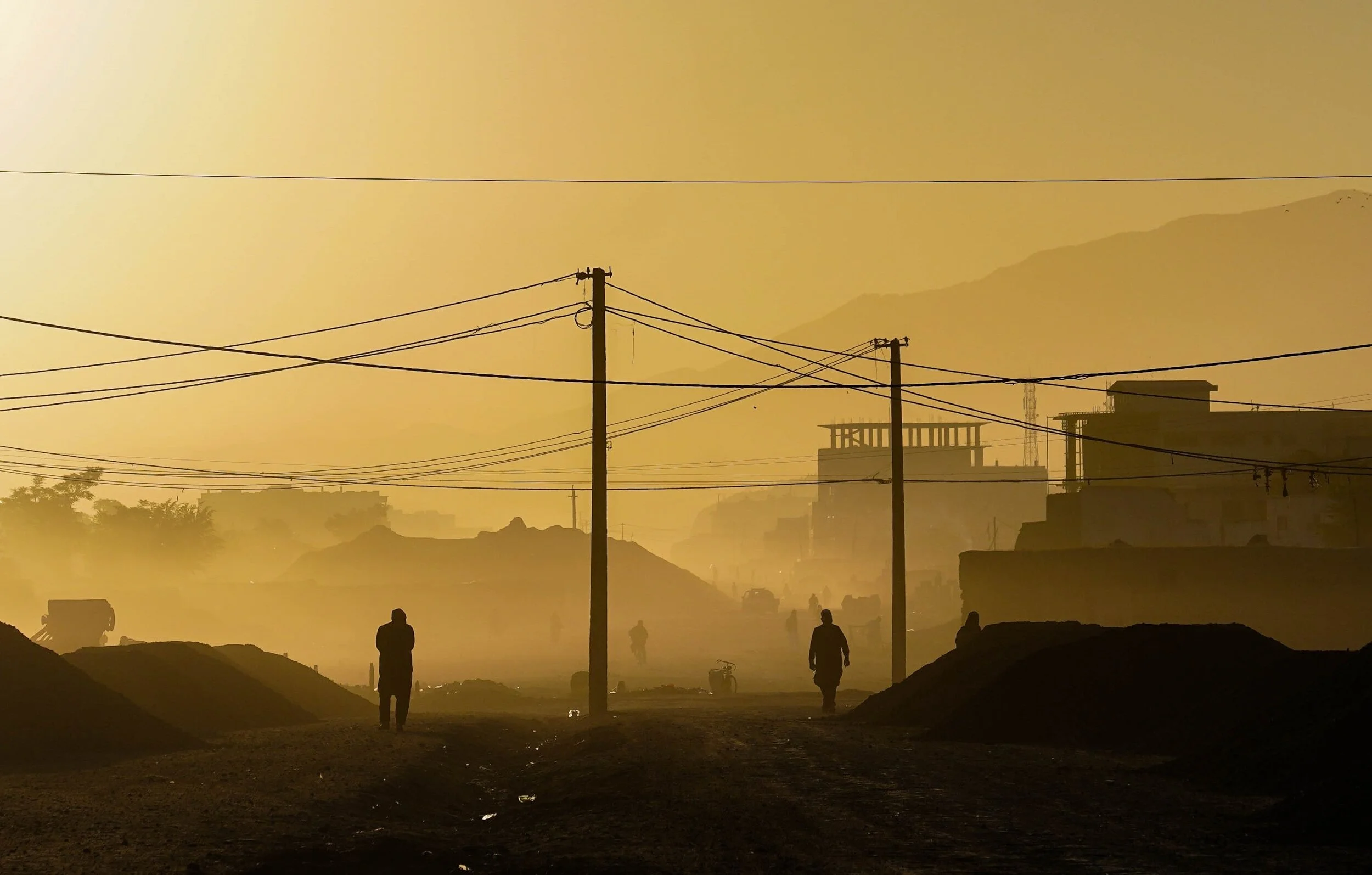
Kabul, Afghanistan. Courtesy of Mohammad Rahmani

Kabul, Afghanistan. Courtesy of Mohammad Rahmani

I'm writing about every country in the world. One a day for 195 days. Learn more